How Do You Vet Your Writers?
Our writers pass rigorous tests in their fields, have verified degrees, and undergo continuous training to ensure expertise. This ensures your paper is handled by a true professional. Our selective screening process maintains the highest standards of academic competence. You can trust our team to deliver top-quality work. Ace my homework with confidence knowing every writer meets stringent qualification standards.
The prokaryotes are a group composed of millions of genetically different unicellular microorganism. They have a low structural diversity, however are genetically and physiologically very diverse (Kenneth Todar, 2009). Particular traits help to assemble or distinguish, particular group of prokaryotic organisms to microbiologists. The classification scheme is dominated by the prokaryotes phylogeny. In the phylogenic Tree of Life, prokaryotes are divided into 2 domains:
The new edition of Bergey’s Manual of Systematic Bacteriology, revealed the existence of 24 different phyla of bacteria. Extant phyla of the Domain Bacteria:
- Acidobacteria
- Actinobacteria
- Aquificae
- Bacteroidetes
- Chlamydiae
- Chlorobi
- Chloroflexi
- Chrysiogenetes
- Cyanobacteria
- Deferribacteres
- Deinococcus-Thermus
- Dictyoglomi
- Fibrobacteres
- Firmicutes
- Fusobacteria
- Gemmatimonadetes
- Nitrospirae
- Planctomycetes
- Proteobacteria
- Spirochaetes
- Thermodesulfobacteria
- Thermomicrobia
- Thermotogae
- Verrucomicrobia
What are bacteria?
Bacteria are unicellular organisms and most of them multiply by binary fission. Water bodies, soil and air are teeming with these microscopic organisms known bacteria. Most of them are free-living microorganisms; however some of them need animal or plant hosts to complete their live cycle. Scientifically bacteria are the most abundant living things on earth. Bacterial study also called as, Bacteriology, showed that these microscopic organisms are intricately linked to every life process, whether that of human animal or plants. Bacteria absorb nutrients from their surrounding environment secret a mixture of toxins that help their growth and survival and excrete waste products.
Structure, Size and Shape of bacteria
Each bacterium is a single cell, which is very minuscule, about a few micrometers (10-6 meters) in length and has a very simple structure. A bacterium cell has five important structural constituents, a cell wall, a cell membrane, a nucleoid (DNA), ribosomes and a kind of surface layer which can or can not be built in the wall. According to the structure, there are three distinct regions of the cell. Starting with appendages which are attached to the surface of the cell in form of flagella or pili, a cell envelop, constituting of a capsule, a cell wall and a plasma membrane and finally the cytoplasmic region that contains the cells organelles.
Can You Prevent Paper Resale?
We never resell papers—each is custom-written and stored securely, with strict policies to protect your ownership. Your work stays yours alone. Once delivered, your paper belongs exclusively to you with full intellectual property rights. We guarantee complete confidentiality for every order. Paper writing ownership remains entirely yours with zero resale risk.
Table 2.1: Summary of functions and characteristics of typical bacterial cell structures
|
Structure
|
Function(s)
|
Predominant chemical composition(s) What Is Your Fastest Turnaround?We can deliver polished papers in 3 hours for urgent needs, with top writers ensuring quality under pressure. Perfect for tight deadlines, we have got you covered. Our express service maintains academic standards even with accelerated timelines. Chat with support to confirm timing. Research study bay rapid delivery combines speed with uncompromised academic excellence.
|
|
Flagella
|
Swimming movement.
|
protein
|
|
Pili
|
|
Sex pilus Can You Help with Lab Reports?Our science writers craft detailed lab reports, including data analysis and clear conclusions, tailored to your experiment. We ensure scientific accuracy and clarity. Lab reports require precise methodology documentation and proper data interpretation. Provide your data or guidelines to get started. Essay writer specialists in STEM fields deliver technically accurate lab documentation.
|
Stabilizes mating bacteria during DNA transfer by conjugation.
|
protein
|
|
Common pili or fimbriae
|
Attach to surfaces; protects against phagocytic engulfment.
|
protein How Do I Provide Feedback?Use our messaging system to share feedback with your writer, ensuring your paper evolves to meet your vision. This keeps you in control of the process. Continuous feedback loops allow for real-time adjustments and refinements. Log in to your account to communicate directly. My assignment help includes interactive feedback systems for collaborative refinement.
|
|
Capsules (includes “slime layers” and glycocalyx)
|
Attach to surfaces; protects against phagotrophic engulfment, sometimes kill or digest; storage of nutrients or protects against dehydration.
|
Usually polysaccharide; rarely polypeptide
|
|
Cell wall
|
|
Gram-positive bacteria Can You Write for Graduate Programs?Our Ph.D. writers create advanced papers for graduate-level work, with deep research and sophisticated arguments. We cater to the demands of graduate studies. Graduate writing requires mastery of theoretical frameworks and scholarly discourse. Share your programs requirements for a perfect fit. Ace tutors with advanced degrees support graduate-level academic excellence.
|
Prevents from osmotic breakdown of cell protoplast and add rigidity and shape to cells.
|
Peptidoglycan (murein) complexed with teichoic acids
|
|
Gram-negative bacteria
|
Peptidoglycan prevents osmotic breakdown and give rigidity and shape; permeability of outer membrane act as a barrier; combined LPS and proteins have a variety of functions. What Plagiarism Tools Do You Use?We use in-house tools and WriteCheck to ensure 95%+ originality, keeping your paper unique. A free originality report is included with every order. Our comprehensive plagiarism screening catches even paraphrased content to guarantee authenticity. Your work is always crafted from scratch. Research essay service authenticity is verified through industry-leading detection technology.
|
Peptidoglycan (murein) enclosed by phospholipid protein-lipopolysaccharide “outer membrane”
|
|
Plasma membrane
|
Transportation of solutes, permeability barrier; ATP generation; site of various enzyme systems.
|
Phospholipid and protein Can You Follow Strict Rubrics?We meticulously follow your rubric, ensuring every requirement—structure, sources, tone—is met with precision. Our editors double-check for compliance. Rubric adherence ensures maximum grade potential by meeting all assessment criteria. Upload your rubric for a flawless paper. Essay helper precision ensures every rubric requirement receives careful attention.
|
|
Ribosomes
|
Sites of translation (protein synthesis)
|
RNA and protein
|
|
Inclusions How Do You Handle Urgent Revisions?Urgent revisions are prioritized, with editors turning around changes in hours to meet your deadlines. We act fast to keep your paper on track. Our rapid-response team addresses time-sensitive revision needs without compromising quality. Submit your revision requests through your account for quick results. Paper writing modifications are expedited for urgent academic situations.
|
Often reserves of nutrients; additional specialized functions
|
Highly variable; carbohydrate, lipid, protein or inorganic
|
|
Chromosome
|
Genetic material of cell Can You Write Admission Essays?We craft standout admission essays, showcasing your unique story to make your application shine. Our writers highlight your strengths effectively. Admission essays require authentic voice and compelling narratives that resonate with committees. Share your goals in the order form for a compelling essay. Assignment writer expertise creates admission materials that capture committee attention.
|
DNA
|
[source: Kenneth Todar, 2009]
Various bacteria can be identified, simply through visual perusal. The identification begin by considering the appearance of the bacterial colony, followed by viewing individual bacterium under a microscope and taking into consideration the shapes, types of groupings and other feature such as the location and number of flagella. According to shapes and cell arrangements, there are three main morphological categories of bacteria, cocci (spherical), bacilli (rod-shaped) and spiral (twisted) however pleomorphic bacteria can have various shapes. Cell organisation can be singularly, in clusters and in chains.
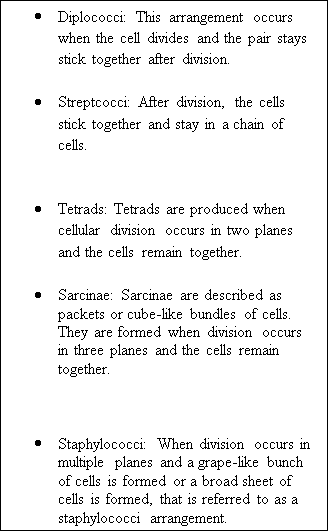 Cocci may be oval, elongated, or flattened on one side and can remain attached after cell division.
What Is Your Expertise in STEM Fields?
Our STEM writers hold advanced degrees and deliver precise, data-driven papers for technical subjects. We ensure accuracy in every detail. Technical writing demands both subject mastery and clear communication of complex concepts. Provide your technical requirements for a tailored result. Ace my homework challenges in science and mathematics with specialized expert support.
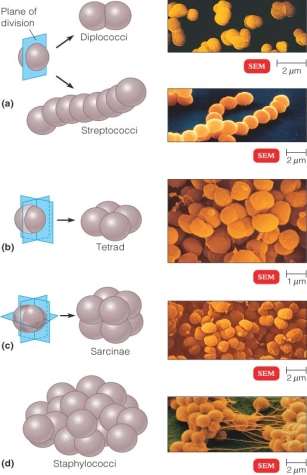
Figure 2.1: Arrangements of cocci; [source: Anon]
Bacillus is a rod shape. As bacilli divide only across their short axis there are fewer groupings.
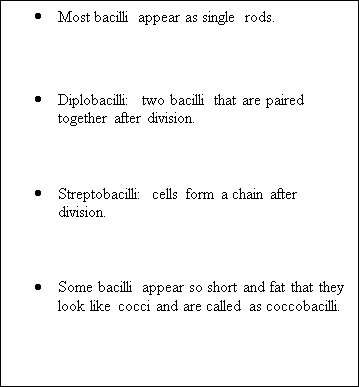
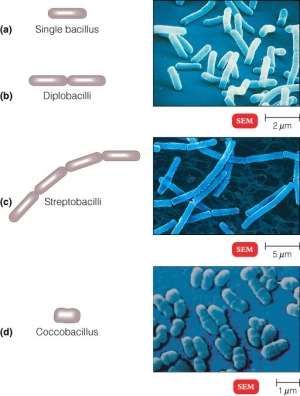
Figure 2.2: Arrangements of bacilli; [source: Anon]
Can You Create Visual Aids?
We include charts, graphs, or tables when needed, enhancing your papers clarity and professionalism. These visuals support your arguments effectively. Data visualization strengthens academic arguments by making complex information accessible. Specify any visual needs in your order. Assessment help includes professional visual elements that enhance presentation quality.
Spiral bacteria have one or more twists.
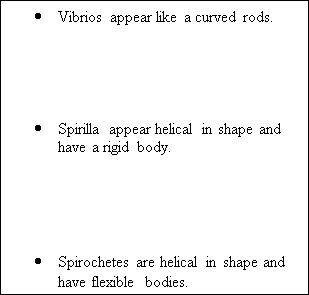
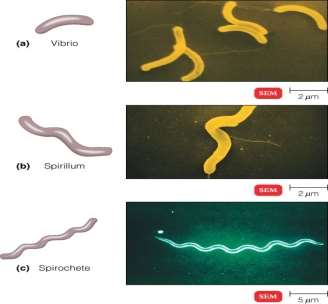
Figure 2.3: Arrangements of Spiral bacteria; [source: Anon]
Nutritional classification for bacteria
Bacteria have various requirements for growth. As bacteria are greatly affected by environmental conditions, their growth depends on the support of their environmental niches for their individual needs. The main environmental factors affecting microbial growth are pH, water activity, oxygen levels and temperature; however the availability of nutrients in their surroundings is also an important factor (Micheal H.Geradi, 2006). The major nutritional types of bacteria are (Anon)
- Photoautotrophs are organisms that can convert light energy into chemical energy.
- Photoheterotrophs are organisms that make organic carbon as a source for biosynthesis however use light energy to produce ATP (photosynthesis).
- Chemoautotrophs or Lithoautotrophs (Lithotrophs) are microbes that obtain their energy by oxidizing inorganic compounds such as iron, hydrogen gas and hydrogen sulfide.
- Chemoheterotrophs or Heterotrophs are bacteria that derive their source of energy from organic compounds such as sugars, lipids and proteins.
Microbial classification according to environmental requirement for growth.
Physical and chemical conditions of the environment greatly affect the activities of microorganisms. Different organisms react differently the various kinds of environmental conditions. An environment which is favourable to one microorganism may be harmful another; however some microbes have developed tolerance to adverse condition in which they cannot growth properly. Organisms may respond differently to a habitat in term of, survival, growth, differentiation and reproduction (E. B. Smith). The major factors affecting microbial growth are:
How Do You Ensure Confidentiality?
Your data is encrypted, and papers are never shared, ensuring complete privacy throughout the process. We prioritize your security at every step. Our privacy protocols exceed industry standards with multiple layers of data protection. Rest easy knowing your order is protected. Research study bay confidentiality protocols protect every student interaction and transaction.
- Temperature
- Oxygen
- pH
- Water activity (Osmotic effects)
Temperature
Temperature probably is the principal factor affecting growth, because if temperature changes occur microorganisms will stop growing. The average temperatures for bacterial growth vary among microorganisms. Some species of microbes can grow at low temperatures as -10oC and others at high temperatures as 100oC or even higher (John Blamire, 2000). The higher and lower temperatures influence the cell metabolism. At low temperatures, particles move slower, enzymes are unable to control chemical reactions, and consequently the viscosity of the cytoplasm brings all activity to a halt. An increase in temperature make particles to move faster, metabolism is boost up by enzymes activities and growth rate increases. However cellular growth ceases as temperature increases to a point where enzymes denaturation occurs due to higher rate of activities (John Blamire, 2000). Each microorganism has
- a minimum temperature for growth and below which growth will stop,
- an optimal temperature which allow rapid growth,
- and a maximum temperature and above which the growth is impossible.
These three types of temperatures are called cardinal temperature and are unique to each type of organisms.