
Is there a statistically significant difference between the lengths of Bladder Wracks (Fucus vesiculosus) in the exposed or sheltered middle shore?
Low tide – 1.53m at 17:39
Grid reference – SM 874033
Abstract
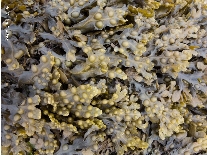 The aim of this investigation was to determine if there was a difference in height between Bladder Wracks in the middle shore of an exposed area and a sheltered area of the beach at Angle Point in Pembrokeshire, Wales. This was done, by measuring the longest length of the Bladder Wracks, within a 20×1.5m transect on both the exposed and sheltered side of the beach. A total of 216 samples were found and a t-test revealed that there was a significant statistical difference between the height of a Bladder Wrack and its exposure on the beach. I also further found that not only was there a difference between Bladder Wrack height, but also a difference in abundance at each site suggesting that there is a relationship between the seaweed heights and abundance of Bladder Wracks depending on exposure. This was due to multiple biotic and abiotic factors such as wave action and salinity.
Introduction
Background Information
This investigation will focus on studying the species Fucus vesiculosus, commonly known as Bladder Wracks. They are classified: Domain: Eukaryotic; Kingdom: Chromista; Phylum: Heterokontophyta; Class: Phaeophyceae; Order: Fucales; Family: Fucaceae; Genus: Fucus; Species: Fucus vesiculosus. [1]
Figure 1: Fucus vesiculosus
The Bladder Wrack is one of the most prevalent species of algae in the North Atlantic Ocean. It is found in the more temperate waters with lower salinity. It provides food for a number of different organisms living near the northern Atlantic shore as well as nutrients for humans, which help people lose weight and cure the iodine deficiency, goiter. [2]
The fronds of the bladder wrack grow up to 90 cm long and 2.5 cm wide and have a prominent midrib throughout. The seaweed is identified by the spherical bladders, which are paired down either side of the mid-rib. These, however, may be absent in the juvenile bladder wracks. The margin is smooth and the frond is dichotomously branched.[3] The bladder wrack is most commonly attached to hard substrata pebbles, rocks, and dense seabeds for example. This connection is through a discoid holdfast, root like structure ensuring that the algae isn’t pulled out with strong waves and currents in the ocean.
The bladder wrack has evolved over time to find its ecological niche in the littoral zone, where the tide changes the depth of the water, and the sublittoral zone, where the organism is constantly submerged. An ecological niche is the role of an organism within its habitat. Being in the littoral zone can cause some problems for the bladder wracks. For example, when the water recedes at low tide, many organisms are left exposed to the heat of the sun and dry out. It has adapted to fulfil its niche in a number of ways, which will be discussed.
Bladder wrack reproduces by means of special receptacles that begin to develop on the plants sometime around December and which remain present until late summer. Peak fertility occurs in May and June, and eggs and sperm are released directly into the water column when the plants are submerged at high tide. Fertilisation is largely a matter of chance, so to increase the probability of successful reproduction large quantities of eggs and sperm are released. One plant may have more than 1000 reproductive receptacles containing more than 1,000,000 eggs.[4] These times of reproduction could have an affect on my findings and the length of the bladder wracks at the time of year. As this study is taking place during one of the reproduction periods in June, the bladder wracks will only just have reproduced and therefore will not have a high quantity of smaller young bladder wracks.
Fucus vesiculosus have a lot of morphological adaptation, which are beneficial to survival. The first adaptation, the holdfast is a root like structure, which ensures that an organism doesn’t get pulled away from the area it has evolved to thrive in. Next, the bladder wrack has evolved to be long thin and flat for a maximum amount of surface area to volume ratio. The extremely flat fronds allow it to absorb the maximum amount of sunlight needed for photosynthesis. The reason for the bladder wracks brown pigment (fucoxanthin) ensures a greater absorption of light, making photosynthesis more efficient. The brown colour of these algae results from the dominance of the xanthophyll pigment fucoxanthin, which masks the other pigments, Chlorophyll a and c (there is no Chlorophyll b), beta-carotene and other xanthophylls. The colours blue, with the longest wavelength, red and green on the spectra are mostly absorbed while the colour brown is reflected, therefore the brown colour of the algae.[5]
As I mentioned above, the bladders on the bladder wrack are another morphological adaptation. The bladders contain the product of photosynthesis, oxygen, allowing the seaweed to stay afloat when the tide comes back in, so that photosynthesis can proceed at a more productive rate. Oxygen in seaweed is produced in the same why as plants on land. During the light dependent reactions and phosphorylation in the chloroplasts, energy from light raises two electrons in each chlorophyll molecule to a higher energy level. Once these electrons left the chlorophyll molecules, they pass along the enzyme transport chain into the thylakoid membranes through a series of oxidation and reduction reactions in carrier proteins. The energy made in these redox reactions synthesizes ATP. Oxygen is produced in the bladder wrack when an enzyme catalyses the splitting of water in the thylakoid space. Some of this oxygen is also used in the respiration of the bladder wrack and increases growth and the length of the seaweed.[6]
The bladders are held together by white filaments, which break as the organism increases in age. Bladder wracks are producers at the bottom of the food chain so they have multiple predators, which they are adapted to overcome by producing and coating themselves in various compounds called phlorotannins.[7]
International student? We write to your country's academic standard.
From Harvard referencing for UK universities to APA 7th for US colleges, our geo-specialist writers know exactly what professors in your country expect. Deadlines from 3 hours. 100% original. Confidential and secure.
✓ Plagiarism-free · ✓ 100% human · ✓ Free revisions · ✓ Confidential
🔒 No payment to start · From 3 hrs
The brown algae gain nutrition through the process of photosynthesis where by sugars are produced. The green pigment, chlorophyll, captures the sun’s energy, converting light energy into chemical energy – glucose. Carbon dioxide and water are the only chemicals bladder wracks need to undergo photosynthesis. Bladder wracks mainly contain the pigment chlorophyll a, giving it its greenish brown colour.[8]
This algae is a dioecious organism which means the male and female gametes are on separate organism. Bladder wracks require water for reproduction where by the flagellated sperm eventually move toward the egg – this is broadcast spawning. The females produce nonspecific pheromones to attract the sperm in its direction. The algae only produce their gametes during summer and spring, in autumn and winter, the main focus of the bladder wracks is growth and development during the harsher conditions.[9]
Personal engagement
On February 15th, 1996 at 8 pm, the Sea Empress oil tanker ran aground just off the coast of Pembrokeshire in southwest wales.[10] Roughly 70,000 tons of North Sea light crude oil spilled out and it affected 120 miles of shoreline including some of UK’s most important and bio diverse coastal habitats. It affected hundreds of different species of algae, shells and birds, including the species of algae, which I am currently investigating.[11] I recently read an article on how the coastline has improved and recovered after the spill and therefore am really interested in researching this topic further myself. It is clearly evident from this oil spill that the environment around these algae has a great impact on their growth and reproduction, and just a slight change can affect their abundance majorly. Therefore when the environment of the water was completely contaminated it resulted in the death of a large percentage of the bladder wracks in this region. I want to see how other abiotic and environmental conditions like wave action affect both the height and abundance of the bladder wracks.
Aim
The aim is to determine if there is a statistically significant difference between the length of the Fucus Vesiculosus on sheltered shore and the length of the Fucus Vesiculosus on the exposed shore. The abiotic factors were taken into consideration from both areas to ensure whether or not they influenced the length of the bladder wracks.
Hypothesis
For my hypothesis, I am expecting data that will display that there is a difference in the length of bladder wracks in sheltered and exposed parts of the shore. The reason as to why the height – the height being from the ground to the longest frond – of the seaweeds will differ depending on the exposure is because in the areas of extreme exposure, the bladder wracks will not be able to overcome and survive the strong wave action which comes along with the prevailing wind. Where as on the sheltered side where there is less wave action, the bladder wracks are then less likely to die from being ripped out from the root and therefore there will be both a larger amount of bladder wracks on the sheltered side as well as a higher average height of the algae.
Method
Dependent variable: Length of Bladder Wracks (cm). This was measured with a meter ruler.
Independent variable: Position of seaweed on the beach – sheltered or exposed
Table 1: Control variables
| Control | Method of control | Reason for control |
| Time | The data was taken on the same day of the year in roughly the same time period so that the tide remained at low tide. | The length of the seaweed varies throughout the year with its life cycle and its growth. |
| Species of seaweed | Only the species of Fucus Vesiculosus was measured. | Different species of seaweeds are different sizes and in order for my investigation to be fair, it was essential to keep the species the same. |
| Meter ruler | The same meter ruler was used. | Different meter rulers may be different scales or may have varied accuracy. |
| Length of seaweed measured | The longest length of the seaweed was always measured. | If the measured length of the seaweed were not always the longest, my results would be very unreliable as the different leaves of the seaweed vary in length. |
| Shore height | The seaweed was only measured at one height on the shore – the mid shore (4.2m above chart datum) | If the seaweed were measured randomly or anywhere else, this would have a negative effect on my results. |
| Minimum amount of Bladder wracks measured | The minimum amount of bladder wracks measured was the same on the exposed shore as on the sheltered shore. | The minimum number of data points for the bladder wracks will be over 200 in order to give me a reliable mean. |
International student? We write to your country's academic standard.
From Harvard referencing for UK universities to APA 7th for US colleges, our geo-specialist writers know exactly what professors in your country expect. Deadlines from 3 hours. 100% original. Confidential and secure.
✓ Plagiarism-free · ✓ 100% human · ✓ Free revisions · ✓ Confidential
🔒 No payment to start · From 3 hrs
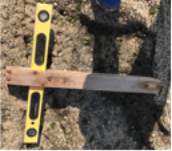 Equipment list
- Meter ruler (±0.01mm)
- ¼ m2 unstrung quadrat (error)
- Cross staff
- Pen, paper and clipboard with results table already drawn
- Tape measure (±1cm)
- Electronic thermometer (±0.1°C)
- Hygrometer (±1%)
Figure 6: Cross Staff
- Electronic anemometer (±0.1m/s)
- Lux meter (±2 lux)
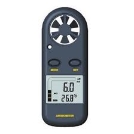
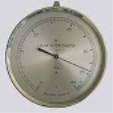
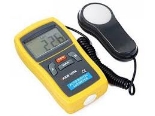
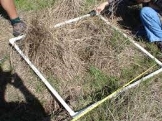
Figure 5: ¼-unstrung quadrat
Figure 1: Hygrometer
Figure 3: Lux meter
Figure 4: Electronic anemometer
Abiotic factors
I measured the abiotic factors to take them into consideration when reviewing my results. They cannot be controlled but they should be measured so any differences can be considered when analyzing the results.
| Abiotic Factors | How it affects results | How it will be measured |
| Temperature | A higher temperature results in faster rate of photosynthesis meaning that the algae will grow faster. | Electronic Thermometer (+0.1ºC) |
| Humidity | A more humid environment is more favorable because desiccation is less likely for the Bladder wracks. | Hygrometer (+1%) |
| Wind speed | An extremely high wind speed could result with some of the algae being ripped out from their roots. | Electronic Anemometer (+0.1m/s) |
| Light intensity | Light intensity affect the rate of photosynthesis of the algae meaning more food will be produced and the algae will grow taller. | Lux (+2 lux) |
Table 2: Abiotic factors, how they are measured and how they affect the results.
Study site
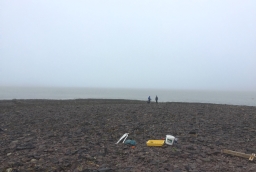
The study took place on Angle point in Pembrokeshire, Wales. This is a rocky beach with both a sheltered side and a semi exposed side, allowing various species of algae to grow and flourish. The Bladder Wracks were measured on the middle shore, 4.2m above sea level. The red lines on the pictures below show roughly the area that was sampled.
International student? We write to your country's academic standard.
From Harvard referencing for UK universities to APA 7th for US colleges, our geo-specialist writers know exactly what professors in your country expect. Deadlines from 3 hours. 100% original. Confidential and secure.
✓ Plagiarism-free · ✓ 100% human · ✓ Free revisions · ✓ Confidential
🔒 No payment to start · From 3 hrs
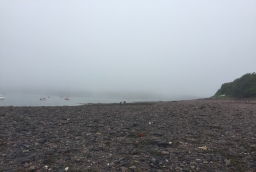
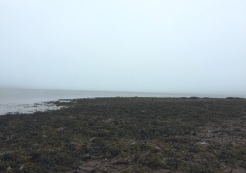
Semi exposed side of bay
Sheltered side of the bay
Angle Point


Trial study
Before I conducted my experiment, I performed a trial study in order check both my research question was answerable and my methodology was correct to ensure I could gather the correct data to determine my hypothesis.
During this trial study, I decided to place down a rope in the middle shore and measure all of the bladder wracks along this 10m transect. As there were so few bladder wracks along this transect, it meant that I couldn’t collect enough data points for the middle shore. In order for me to collect the amount of data points that I needed I would have had to repeat this placing of the transect over 20 times. Instead, I decided to create a wider transect by placing down two measuring tapes along a 20m stretch with 1.5m between the two tape measures creating 30m2 area in which I measured each bladder wrack until I had enough data points. In the trial study I planned to record the difference in bladder wrack length between the middle shore and the lower shore, however due to the fact that the tide wasn’t low enough during the 5 hours we were given to conduct our research, I ended up changing my research question. I compared the length of bladder wracks on two different parts of the beach with varying exposure, however, keeping the height of the beach the same.
Procedure
- Identify the exposed and sheltered part of the beach.
- Starting with the exposed side of the beach, use a 0.6m cross staff to find the middle shore of the beach at 4.2m above sea level. The cross level must be kept horizontal so that the spirit is level and the eyehole can be looked through to find the point on the rock 0.6m vertically above. A marker is placed there and the cross staff is moved to the marker and the process continues until the height of 4.2m is reached. In my experiment, the sea was at 2.35 according to the external tide data so roughly three cross staff measurements had to be made to reach 4.2m.
- Create a horizontal transect by placing two 20m tape measures parallel to the sea with 150cm between the two tapes at the middle shore of the exposed side of the beach.
- Using a metre ruler measure the longest length of 100 Bladder Wracks between this 20×1.5m transect.
- Record these results into the data table.
- Repeat points 2 to 5 on the sheltered section of the beach.
7. Measure the abiotic factors (temperature, light intensity and humidity) using an electronic thermometer, a lux meter and a hygrometer.
Reliability
In order to ensure that this experiment is reliable, I will collect 100 data points from both the exposed area of the beach and the sheltered area. This makes the investigation more reliable as the average deduced will be more repeatable due to the large amount of data points. Measuring the correct length of the longest frond of bladder wrack to the nearest centimetre will also had to the accuracy of this experiment.
Safety considerations
Safety precautions must be taken into consideration while conducting this experiment in order to minimise the risk of danger in this investigation.
International student? We write to your country's academic standard.
From Harvard referencing for UK universities to APA 7th for US colleges, our geo-specialist writers know exactly what professors in your country expect. Deadlines from 3 hours. 100% original. Confidential and secure.
✓ Plagiarism-free · ✓ 100% human · ✓ Free revisions · ✓ Confidential
🔒 No payment to start · From 3 hrs
| Hazard | Severity (1-5) | Likelihood |
