
TABLE OF CONTENTS
EXECUITIVE SUMMARY………………………………………. 2
LIST OF TABLES……………………………………………. 3
LIST OF FIGURES…………………………………………… 3
LIST OF ABBREVIATIONS – Battery and waste management terminology & acronyms…… 4
INTRODUCTION …………………………………………… 5
- Background – History of Batteries………………………………. 5
- History and development of the battery
- Battery Composition and Chemistry
1.2.1 The Lead Acid Battery – materials used in manufacture
1.2.2 The Lithium Ion Battery – materials used in manufacture
Need a custom essay written to your exact brief?
Our expert writers craft original essays tailored to your topic, word count, citation style, and deadline — from argumentative and descriptive to analytical and reflective. Every essay is plagiarism-free and written by a subject specialist.
✓ Plagiarism-free · ✓ 100% human · ✓ Free revisions · ✓ Confidential
🔒 No payment to start · From 3 hrs
- Basics of Waste Management
1.3.1 Principles of Reuse
1.3.2 Principles of Material Recycling
- Review of Literature– Waste Battery, Repurposing Recycling……………….15
- Overview – Programs and Standardization – Other Industries & Countries
- Der Grüne Punkt (Germany) and the Mobius Loop……………….21
- Transportation of Dangerous Goods (Canada)………………….23
- Stewardship Ontario…………………………………24
- Electric Vehicle Industry and Secondary Uses of EV batteries………………..24
- Battery Repurposing…………………………………25
- Nissan Green Charge………………………………..28
- Standardization for Recycling and Material Recovery ……………………29
- Labeling systems in the battery recovery industry……………….29
- RFID………………………………………….31
- Technical Limitations ………………………………………32
DISCUSSION AND CONCLUSION…………………………………..36
REFERENCES
EXECUTIVE SUMMARY
Future Smart Grid electrical systems will maximize the potential of energy storage technologies including innovative battery storage systems. Current research on distributed scale battery storage systems focuses primarily on systems using lithium battery technology. [10] This research serves as a basic primer to provide education tool a basic understanding of the management of end of life batteries for those new to the topic. A review of the history and basics of lead acid batteries, as well as the fundamentals of waste management are reviewed.
Current IEC standards for battery nomenclature are designed to identify cell size and power for plug and play type used. A review of the literature shows a need for an easily implemented system for worker identification of spent cells. As EVs further penetrate the vehicle market [5.] a sharp increase in the volumes of lithium used in the manufacture of cells will be required. With limited volumes of raw lithium available in the market, a need for a process flow for recycling lithium from spent cells will be required. Recaptured lithium from used batteries is an experimental technology with the potential to provide high grade feed stock to new batteries. A repurposing of EV batteries in energy storage systems, and the fundamental need for a standardized identification system allowing visual identification of cell chemistry will serve as a base framework for recycling initiatives.
Need a custom essay written to your exact brief?
Our expert writers craft original essays tailored to your topic, word count, citation style, and deadline — from argumentative and descriptive to analytical and reflective. Every essay is plagiarism-free and written by a subject specialist.
✓ Plagiarism-free · ✓ 100% human · ✓ Free revisions · ✓ Confidential
🔒 No payment to start · From 3 hrs
LIST OF TABLES
- Table 1. Comparison of Battery Materials
LIST OF FIGURES
- Fig. 1. Waste consumer dry cell batteries
- Fig. 2 Spent lead acid batteries awaiting recycling
- Fig. 3 Health hazard warning lead acid battery
- Fig. 4. Mixed spent lithium ion batteries
- Fig. 5. Der Grune Punkt
- Fig. 6. Mobius Loop
- Fig. 7. Transportation of Dangerous Goods Labels
- Fig. 8. Total Canadian EV Sales (Fleetcarma)
- Fig. 9 Nissan LEAF
- Fig. 10. Proposed Recycling Process Flow
- Fig. 11. Post-Consumer Mixed Lead Acid Batteries
- Fig. 12. Lithium Battery Management Process Flow
LIST OF ABBREVIATIONS – List of Key Terms and Abbreviations
- BEV – battery electric vehicle
- Capacity loss – battery can not be charged to reach full capacity and in terms of EV, that point where the potential range of travel for the vehicle is substantially reduced
- Closed loop system – A recycling system that manages materials from initial manufacture to right through consumer use and manages post consumer recycling with an ultimate goal of zero waste being produced through the entire system
- Comingle – waste management term use to denote mixing of dissimilar waste types
- Cost benefit analysis – an economic approach that weighs the benefits vs costs and assigns values to each as a decision making tool
- Energy storage system – system that stores energy for future use, batteries are one example
- EV – Electric vehicle – current standard employs rechargeable lithium ion battery system
- IEC – International Electrotechnical Commission
- Life cycle analysis
- Lithium – a basic element found on the periodic table
- LIB – Lithium Ion Battery(ies)
- MRF – material recovery facility
- PHEV – plug hybrid electric vehicle
- Recycle – the process of de-manufacturing an item back into its constituent material parts
- Reuse – the process of reusing an item, in particular a secondary type use
- Remanufacture – the process of renewing an item and returning it to the market in as new condition
- RFID – Radio frequency identification device – a small electronic tag that can store critical information and can be read remotely
- Secondary use – after fulfilling its primary use, a material is then reused in an alternate form
- SLI – starting, lighting, ignition
INTRODUCTION
- Background – Batteries: Past, Current and Future
The newly emerging electric vehicle market presents daunting new environmental management challenges and opportunities. Touted for their low carbon emissions and eco-friendly nature, the battery systems in EVs deliver clean zero emissions transportation yet the very systems that make EVs clean and eco-friendly are an environmental management problem that is often overlooked when discussing electric vehicles. To be better equipped to understand the specific environmental management challenges battery packs present, a background section will provide reader with basic foundation information on waste management and the basic design principals of electric mobility batteries.
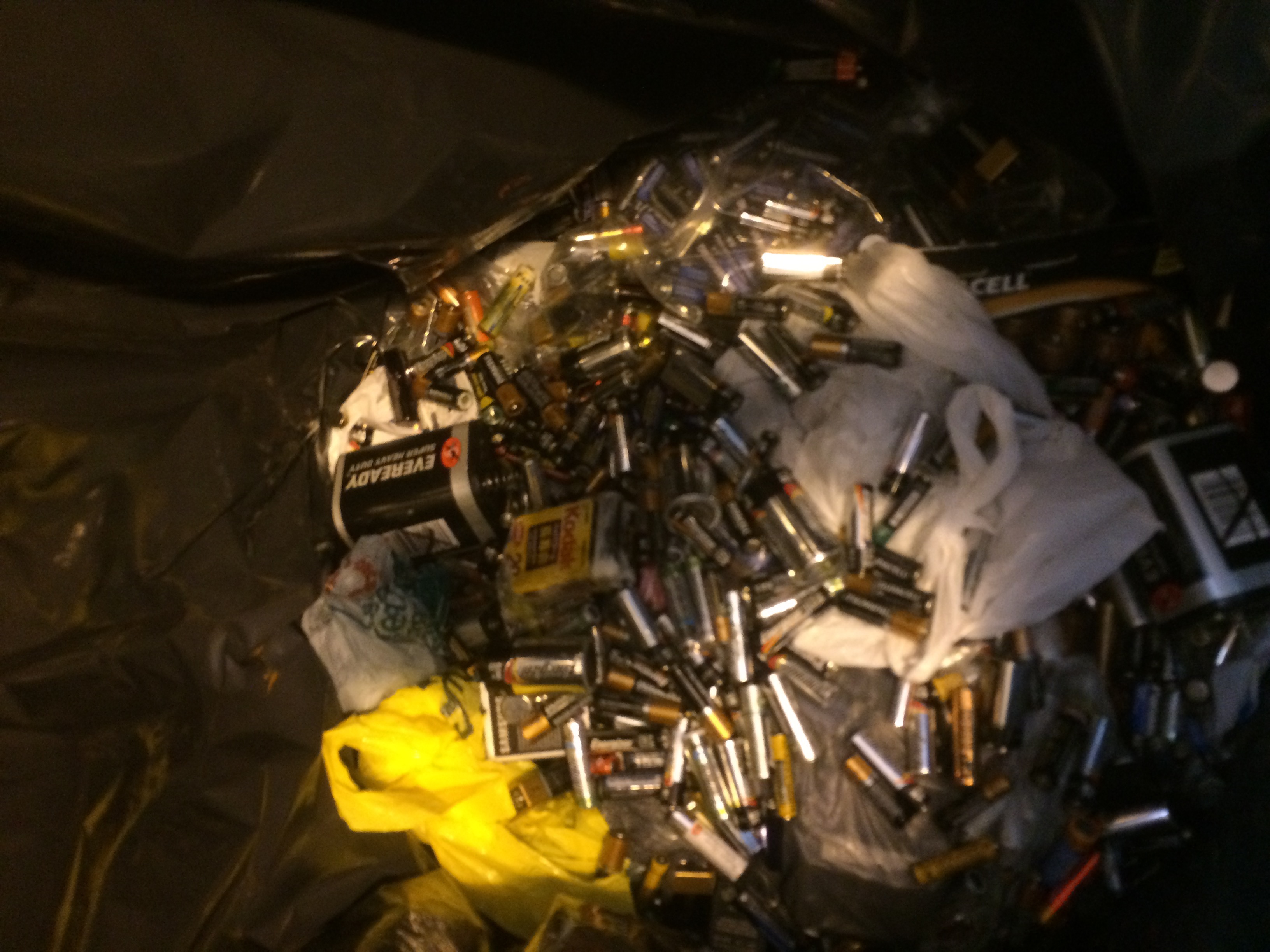
Fig. 1. Waste consumer dry cell batteries – C. Cook 2017
Need a custom essay written to your exact brief?
Our expert writers craft original essays tailored to your topic, word count, citation style, and deadline — from argumentative and descriptive to analytical and reflective. Every essay is plagiarism-free and written by a subject specialist.
✓ Plagiarism-free · ✓ 100% human · ✓ Free revisions · ✓ Confidential
🔒 No payment to start · From 3 hrs
- History and development of the battery
When discussing batteries, most people immediately think of the small, disposable consumer dry cell batteries [Fig 1.] that power simple everyday household items like remote controls. This small electrical wonder stated when Alessandro Volta documented the first demonstrated the concept of storing of energy chemically in a battery cell for later use as electrical energy in a rudimentary battery known as a voltaic pile in 1800. The voltaic pile used metallic disks of the dissimilar metals silver and zinc, with a separator of salt (brine) soaked fabric between the discs. [28.] This simple demonstration was definitive proof that an electric charge could be produced and current would flow through the pile. Volta’s basic concept of battery cell was further developed with substantial improvements on the basic idea as well as the chemistry and packaging. French Physicist Gaston Planté devised the lead acid battery in 1859. Camille Faure further refined the lead acid cell in 1880 taking Planté’s concept and making it a viable commercial product capable of mass production allowing rechargeable power to be available for portable devices.
Quickly adopted by the automotive industry, twelve-volt lead acid batteries are currently the industry standard used for starting, lighting, ignition (SLI) systems in gas power vehicles. [10.] Lead acid batteries have a well-established collection and recycling infrastructure system. One of the most effectively recycled materials in any industry, lead acid batteries and have been routinely captured for recycling due to their large lead content. On average, a single passenger vehicle SLI battery contains approximately 8kg of lead. [10.]
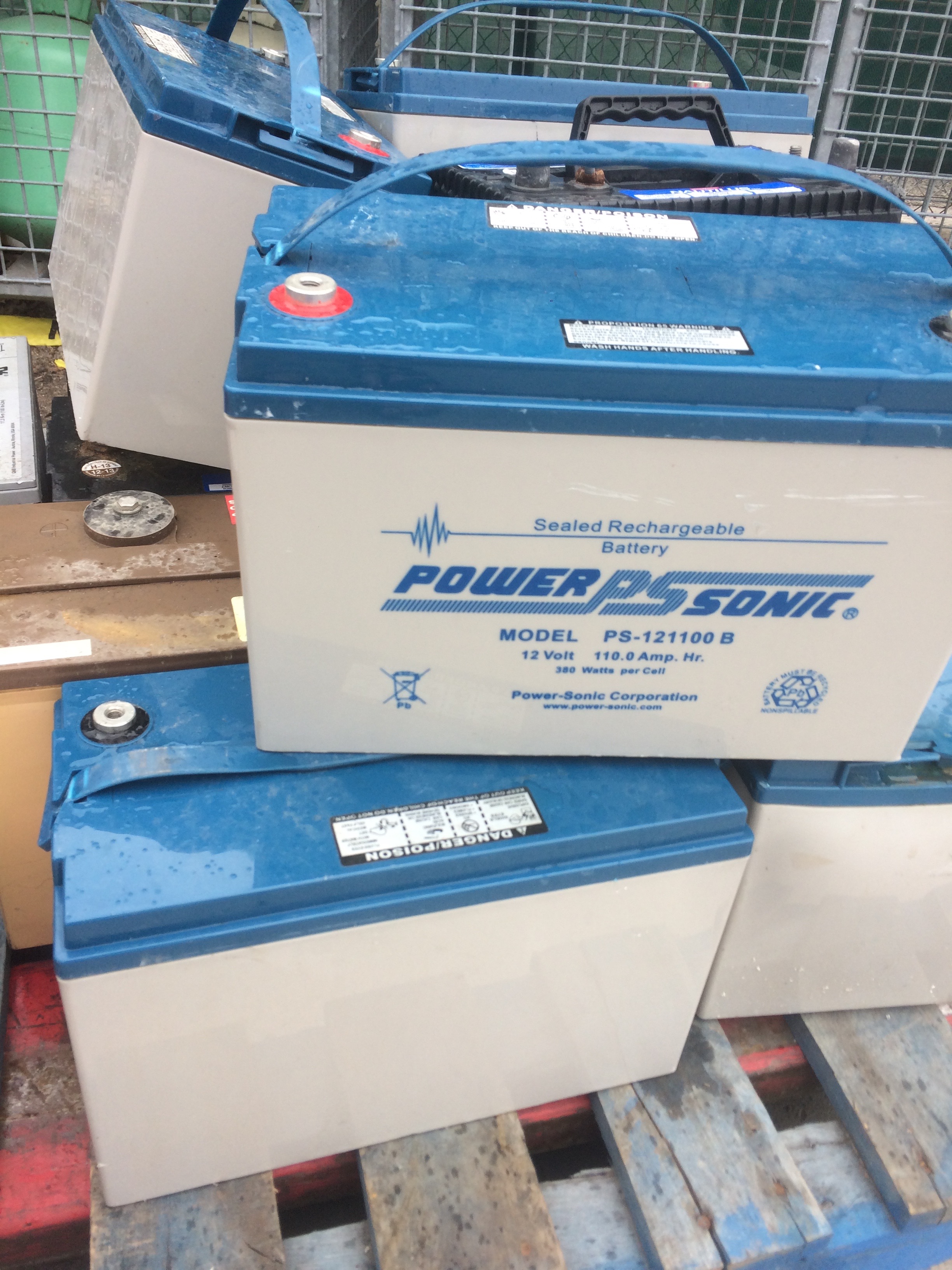
Fig. 2 Spent lead acid batteries awaiting recycling – C. Cook 2017
Carbon emissions and climate change are pushing the paradigm shift to manufacturing passenger vehicles with lower tail pipe emissions, such as PHEVs as well as the development of zero emission BEVs. A key resource in this shift is the base metal lithium, which is a primary material in the chemistry of light weight, high impact lithium batteries. [25.] Largely mined in remote regions of South America, lithium and is increasingly viewed and as a cutting edge component of energy storage systems. Advancements in lithium ion cells and battery packs have allowed an increasing penetration of electric vehicles into the passenger automobile market. Spent lithium cells and battery packs present a new waste management problem, similar the management issues of used lead acid batteries, yet with a significantly increased complexity due to their advanced designs and electronics. [10.]
- Battery Composition and Chemistry
All batteries share some inherently similar structure properties, however, their chemical composition can vary widely. [10.] To better understand the management of used batteries; a review of the material make up and material composition of each lead acid and lithium ion batteries is outlined below.
Tabe 1 . Comparison of Battery Materials (adapted – Gains)[10.]
Need a custom essay written to your exact brief?
Our expert writers craft original essays tailored to your topic, word count, citation style, and deadline — from argumentative and descriptive to analytical and reflective. Every essay is plagiarism-free and written by a subject specialist.
✓ Plagiarism-free · ✓ 100% human · ✓ Free revisions · ✓ Confidential
🔒 No payment to start · From 3 hrs
| Material | Pb | Li-ion |
| Cell | PbOPB | LiMO2 |
| Cathode | Pb | Al |
| Cathode Plate | Pb | Graphite |
| Anode | Pb | Cu |
| Electrolye | H2S04 | Organic Solvent |
