
Optimisation of process parameters of machining titanium alloy (Ti6Al4V) using Taguchi and PCA method on CNC lathe machine
Abstract
Titanium alloy are one of the most prominently used materials in bio-medical field due their high tensile strength, corrosion resistance and light weight property. This paper deals with the experimental study to determine the effects that various cutting parameter have on the surface roughness and Material Removal Rate (MRR) while turning of Ti-6Al-4V metal on CNC Lathe machine. CNC turning according to the operation in the machine shop is method of machining part in which pointed cutting tool is feed parallel to the surface of the material being rotated. The desired rotation is performed by a lathe, consider among one of the oldest machining tool dated back to ancient Egypt. The lathe generally secure and spin the part that is being machined, allows for a simple single point cutting tool to remove and to shape material to create the desired part. Turning allow creation of the varying complex shape like filleted, threaded, plain, tapered, contoured and radius profiles. Turning in the pure form involve spinning of lathe and steady hand of operator to apply cutting tool on the material being machined. Advancement in the technology led to creation of CNC lathes and turning processes. An automated system hold the cutting tool in the lathe and follow a pre-programmed design allows for the precise turn, exact tolerances and many choices of shapes. The design of experiment (D.O.E) has been developed with the help of Taguchi method and Principal component Analysis (PCA) has been used for the optimization of the process parameters involved in the experiment. Analysis of Variance (ANOVA) is utilized to study the contribution of each parameter. Four parameters have been chosen as process variables: cutting speed, feed, depth of cut and nose radius each working combinedly at three different levels. The experiment plan is designed using Taguchi’s L9 Orthogonal Array (OA) as the degree of freedom of the variables available is nine .The effects of various parametric combinations on the turning process are studied and an optimization strategy for a pre decided set of parameter combination is developed in order to get a better surface finish and high MRR of the turned product.
Keywords: CNC (computer numeric control), Taguchi method, PCA (principle component analysis) method, Surface roughness, MRR (material removal rate)
Chapter 1
Introduction
1.1 Introduction to experimental work
Metals play a very vital role in modern medical science as far as fractured bones, joints and hip replacements are considered. For over a century now the use of metals such as steel, cobalt chromium alloy (Co28Cr6Mo), titanium alloy (Ti6Al4V) and many other materials have been prominent in the medical field. In modern industry, the goal is to manufacture high quality product with low cost in shorter period of time. Flexible manufacturing system (FMS) are employed for the purpose along with Computerized Numerical Control (CNC) machines that are capable to achieve very low processing time along with high accuracy. Turning is the most widely used among all cutting processes. Surface roughness has become the most significant technical requirement and it is an index of product quality along with material removal rate. CNC machining is the process used in the field of manufacturing involves use of computer to control the machine tool. Tools that can be controlled in machines includes lathes, mills, routers and grinders. CNC basically stands for computer numerical control. From the surface it look similar to normal PC that controls the machine but the computers has an unique software and control console that sets the system for use in CNC machining. Machine tools function mainly through the numerical control. The computer program is customized for an object and machines that is programmed with CNC machining language ( called G-Code) and it controls all features like feed rate, coordination, location and speed. These days the CNC machines are found in almost all industries, from a small scale industry to big companies. It is used for many purposes such as for making the shaft, gears and many other parts. It can be the manufacturing industries for making the various rounded, square, rectangular, threaded and other job. It is used for fabricating metal, in Electrical Discharge Machining (EDM) industry. CNC machines are also used extensively in the wood working industries to perform various operations like routing and drilling.
1.2 Optimization of process parameters.
In the past various research work has been conducted by researchers with the objective been optimization of process parameters of machining metals to best fit an industrial application in terms of capital investment & quality required. The present research work deals with optimization of process parameters of machining a titanium alloy on CNC lathe & the main objective being machining of titanium alloy in order to suit the various medical application.
The medical industry has been making use of metals in order to replace the broken bones, teeth & in special cases to replace the knee joint & hip joint for over a century now. The various metals which are used in transplant application are cobalt alloy, stainless steel & titanium alloy.
The problem with stainless steel is that it is slightly corrosive in nature & hence we chose to work with Titanium alloy because of its light weight, high fatigue strength & non corrosive nature. Titanium alloy is mainly used in medical transplant of bone joint & aerospace industry. The major issue with these implants are cost of implants because cost of these material and machining is very high the reason being high surface finish .There are various parameters which decide the material, those parameters are high surface finish & cost of machining. Surface finish is very important factor because poor surface finish can lead to various reactions of metal with body, which leads to the entering of metal ions in the bones which will be responsible for many health issues. Thus surface finish is most vital factor which is to be kept in mind while machining. Optimising is also one of vital factor in machining because titanium being a hard material (36 HRC), it is impossible to operate it with normal carbide cutting tool. Basically for harder materials diamond or CBN tool is used. Diamond is the hardest material but cost is quite high, thus CBN is used.
1.3 Vital Application:
Titanium alloy is used for many purposes such as in aircraft as well as in different mechanical components but our project mainly focuses on its use in medical field.In medical field it is used in bone fiting due to its light weight and anticorrosive properties.while selecting the material for medical puposes we have to give extra care for that because it is used in our body, so if any mishappening takes then it may cause serious issue, so we have read many books and journal papers and find titanium is the best suited for this purpose.
Another vital use of titanium alloy is in dental purposes, it is very crucial thing to select best material for dental purposes because many diseases took place through food intake so if we do not select the proper material then it may react with our food that we intake and may suffer from a number of diseases. Teeth is a lifeline for a human being ,by keeping this word in mind we read many books and journal papers and also discussed with our guide and then we select that titanium can safely used for implantment process.It is also used in surgical instrument which play an vital role in image guided surgery,wheel chair,crutches etc.
Titanium also find its uses in aircraft construction as the material used in aircraft should be light in weight and it should be anticorrosive in nature,should be of high tensile strength.so after readind many books we find that titanium has all this properties.Titanium has property to osseo integrate. The most common titanium alloy used is grade5(Ti-6Al-4V).
1.4 Introduction to our future work
Our main objective in future would be selection of various process parameters under different levels and make use of Taguchi DOE to design various experiments combining different levels of process parameters. The selection of various process parameters and their levels is based on studies we have made on different journal papers and books. After this we will conduct the experiment in CNC lathe machine to turn the titanium alloy under different conditions then with help of machined product determine the output parameters which are surface roughness obtain under various experiment and the corresponding material removal rate.
Chapter 2
Literature review
2.1 Overview
Our project is based on the turning of titanium alloy to optimize their process parameter. Many research work have been done on machining of titanium alloy but we focus here on the use of it in bone fitting and dental purposes. Many people are using steel, cobalt ,stainless steel but after studying many books and journal papers, we find that titanium is best suited for this purposes due to its properties like light weight, anti corrosive nature. So we decided to go with titanium alloy
2.2 Review about the material used
Already written your paper? Make it submission-ready.
Our professional editors fix grammar, clarity, structure, and referencing mistakes that spell-checkers miss. Choose light proofreading or full structural editing — your polished, properly cited draft is typically returned within 12 to 24 hours.
✓ Plagiarism-free · ✓ 100% human · ✓ Free revisions · ✓ Confidential
🔒 No payment to start · From 3 hrs
Our project is mainly focusing on the bone fitting and dental purposes. So after reading many books and journal paper as well as the current thought of researcher we find titanium is the best alloy which can be implemented successfully for this process due the properties like anti corrosive nature, lighter than steel. This is the most important part of our project to select a effective material because we are going to deal with human body.
2.3 Review about the process used
After selecting proper material, our main work is to find the best process that can done it in effective manner. So again after reading many books and journal papers we find that CNC lathe can do it in a proper manner, then we decide the basic input parameter of machining process that is speed, tool nose radius, depth of cut, feed to implement the turning process in a effective manner in order to find an optimize value. Then we machine it and got several reading
Yallese et al studied statistical model for the cutting forces in the dry turning operation of AISI H11 hot work piece steel (50 HRC). To achieve this, they performed 27 experiments and specified effects of parameters like cutting speed, depth of cut & feed rate.With the help of MINITAB it was determined that the most important factor affecting the cutting force is depth of cut.
In one another experiment by Gupta wherein the RSM, SVR & NN method was used to analyze the surface roughness , tool wear & power involved in turning operation based on cutting speed, feed rate & cutting time; it was found that SVR & NN method gave better result than regression & RSM.
Experiments carried out by D.Manivel & R.Gandhinathan in order to optimize the surface roughness & tool wear in hard turning of austempered ductile iron (grade 3) where they made use of Taguchi method and L18 orthogonal array by choosing the cutting parameters as cutting speed, feed rate, depth of cut with 3 levels & 2 levels of nose radius. It was found that the cuuting speed is the most dominating factor that affects the surface roughness & tool wear. The optimal cutting condition were predicted using signal to noise ratio & regression analysis.
The study conducted by Sayak Mukherjee , Anurag Kamal, Kaushik Kumar for optimizing the material removal rate (MRR) during turning of SAE 1020 material in CNC lathe where they made use of Taguchi method employing L25 orthogonal array for 3 parameters namely speed, feed & depth of cut with 5 different levels. The study produced predictive equation to determine the MRR with given set of parameters in the CNC lathe. Thus it was later found that with proposed optimal parameters it can be possible to increase efficiency of machining process & decrease the cost of production.
The study conducted by Meenu Gupta & Surinder Kumar in order to investigate the surface roughness & MRR for turning Of UD-GFRP using PCA & Taguchi method. The paper investigates the machinability of unidirectional GFRP composite in turning process. A taguchi L18 orthogonal array is used for designing the experiments. The parameters such as node radius, feed rate, depth of cut, cutting speed, tool rake angle & cutting environment are selected to investigate their effect on the output response. PCA has been used to transform correlated responses inro uncorrelated quality indices. It was determined that surface increases as feed rate increases also it was found that the order of significant parameters lead by feed rate = 0.2 are depth of cut = 1.4 , cutting speed = 159.66 m/min produced the an optimal value of surface roughness equivalent to Ra = 1.498mic.metre & Optimal MRR = 330.267mm3/sec.
The influence of cutting fluid conditions & cutting parameters in turning process of mild steel bar using coated carbide tool insert on CNC lathe were studied by Sujan Debnath, Moola Mohan, Qua Sok Yi to determine their effects on surface roughness & tool wear. They made use of Taguchi orthogonal array to minimize the number of experiments. It was found that effect of feed rate is most dominating factor which contributed to about 34.3% of surface roughness of workpiece & the flow rate of cutting fluid contributed to about 33.1% . Whereas cutting speed & depth of cut prominent factors that influenced the tool wear contributing about 43.1% & 35.8% respectively.
In a study conducted by B.Singarvel , T.Selvaraj, R.Jeyapaul , in multiple objective optimization of turning EN25 steel. They estimated the optimal machining parameters using Taguchi based utility concept coupled with Principal Component Analysis (PCA).This method has been used for simultaneous minimization of surface roughness, cutting force & maximization of MRR. PCA is used to find the weight factor involved in all objectives, WRa = 0.035, Wcutting force = 0.448, WMRR = 0.515 . ANOVA employed on SN ratio to determine their individual contribution in percentage. It was found that the optimal cutting speed equals 244m/min, Feed rate = .1mm/rev, depth of cut = 1mm.
Optimization of machining parameters of SS 316 for SR & MRR in CNC turning was done by Prajapati et al. Dimension of work material is respectively diameter = 45mm & lenght= 35mm. In this paper study was regarding effect & optimization of machining parameters (namely cutting speed, depth of cut & feed rate ) on SR & MRR. In this process an L27 orthogonal array , grey relation analysis & analysis of variance is used.
A study was conducted by Chandrasekaran et al in which he focused on the machinability of AISI 410 on CNC lathe (FANUC) for SR using taguchi method. ANOVA & L27 orthogonal array was involved in this study. Dimension of work piece was Diameter = 32mm & lenght = 60mm. They studied on the effect of process parameters in turning operation of copper by combination of Taguchi & Principle component analysis method. Output parameters which were on focus was material removal rate & surface roughness, which are quality parameters. They concluded that Taguchi with PCA method can be recommended for continuous quality parameters & off line quality control of a process or products.
A study was conducted by Anish et al. in which multi objectives were optimized in CNC end milling of Aluminum using PCA . Input parameters were depth of cut, speed & feed rate. He took surface roughness index Ra & Rq as quality parameters. Total 25 experiments were conducted. He found the optimal setting to assure the lowest quality loss i.e., Depth = 0.10mm, Feed = 1000mm/min, Speed = 4750rpm. He finally concluded that PCA can be used in industries & places where there are large number of response variables.
In order to Optimize the machining parameters of wire electrical discharge machining for multiple performance characteristics on EN 31 tools steel using weighted principal component analysis was studied by Milan Kumar Das et al. The L27 orthogonal array of taguchi is used along with four machining parameters i.e., pulse on time, discharge current, pulse off time, voltage. The output parameter was surface roughness (Ra, Rsk, Rsm, Rq, Rku) & material removal rate(MRR). He found the optimal setting for minimization of roughness & maximization of MRR which was verified through confirmatory test & it was finally concluded that increase in S/N ratio at the optimal condition was about 21%.
Another optimization was carried out by Rina Chakravorty et al. In which she optimised the output of EDM processes using Principal component analysis based utility theory approach .In this experiment she analyzed the two sets of past experimental data on EDM process using the modified PCA based PQLR method & PCA based UT method. The comparison was found out for the optimization performances at the optimal conditions using two methods which concludes that modified PCA based UT method gives better optimization performance.
Sanjit Moshat et al. conducted an experiment on multi objective optimization for end milling operation in CNC end milling using PCA based hybrid taguchi method. Input parameters were depth of cut, speed & feed rate. For quality parameters surface roughness & material removal rate was chosen. L9 orthogonal array of taguchi was used in this experiment. They found that PCA based hybrid Taguchi method is the best way to optimize the multi objective quality parameters.
A research was conducted regarding effect process parameters of EDM on material removal rate & wire wear rate by Miss Swati D.Lahane et al. They used weighed principal component method to interpret the result data. They found that weighed principal component method reduces the uncertainty & complexity of engineers judgment related with Taguchi method. Finally they concluded that WPC offer better overall quality.
A study was conducted by Aouici et al. regarding effect of feed rate, cutting speed & cutting time using RSM & ANOVA. They made use of CBN tool to machine AISI H11 steel & under these cutting forces they analyzed the tool wear & values of surface roughness. They concluded that most influential factor in tool wear is cutting time interval whereas for surface roughness, the feed rate was most influential parameter.
An investigation was conducted by Suresh et al. regarding effects of cutting speed, depth of cut, machining time & feed rate on cutting forces, surface roughness & tool wear during turning of an AISI 4340 hardened steel by involving RSM method. They focused to minimize the surface roughness & cutting forces in which they found that it is mandatory to keep high cutting speed, short machining time, low depth of cut & low feed rate. For minimization of tool wear it is must to keep feed rate & cutting speed low.
Chavosi & Tajdari conducted an experiment in which operated AISI 4140 steel with CBN cutting tool on a lathe with variables as cutting speed & hardness, also keeping feed rate & depth of cut as constant. Output parameters was surface roughness (Ra). They made use of artificial neural networks & regression methods, they developed an approximate model that gives an optimum surface roughness. They concluded that hardness has significant effect on surface roughness.
Sahoo investigated on effects of feed rate, depth of cut & cutting speed on the formation of surface roughness for AISI 1040 steel when the machine was employed on CNC lathe for turning operation. Three input parameters were used whose role is analyzed by the ANOVA analysis & genetic algorithm was used for the purpose of optimizing the parameter results.
Ranganath et al. conducted an experiment in which effects of feed rate, cutting speed & depth of cut on surface roughness of various materials during machining was studied. They concluded that RSM method gives better results.
Kopac & Krajnik investigated the robust design of flank milling parameters with optimization of the milled surface roughness, material removal rate & the cutting speed in the machining of an Aluminum alloy casting plate for injection moulds. He made use of Grey Taguchi method which combined the design of experiment, orthogonal array with grey relational analysis. They concluded with the optimal data of milling parameters for multiple process responses.
Already written your paper? Make it submission-ready.
Our professional editors fix grammar, clarity, structure, and referencing mistakes that spell-checkers miss. Choose light proofreading or full structural editing — your polished, properly cited draft is typically returned within 12 to 24 hours.
✓ Plagiarism-free · ✓ 100% human · ✓ Free revisions · ✓ Confidential
🔒 No payment to start · From 3 hrs
A study was conducted by Yang & Chen regarding systematic method of using Taguchi parameter design in process control of milling machine.In order to identify the optimum surface roughness performance with combination of cutting parameters in an operation of end milling, taguchi parameter design was taken in order.
Ghani et al investigated on optimization of cutting parameters in end milling machine on hardened steel work piece using Tin coated carbide insert tool. He conducted experiment under finishing & semi finishing conditions of high speed cutting considering parameters: feed rate, depth of cut & cutting speed.
A study was conducted by Dileep kumar, Arun, Abraham K Varughese for the effect of tool node radius on suraface finish & optimization of machining parameters of turning operation of titanium alloy(Ti-6Al-4V). Taguchi & Grey relational analysis was used to obtain desired result. L9 orthogonal array is selected with four input parameters namely: nose radius, feed rate, cutting speed & depth of cut. A rod of Ti-6Al-4V of 52 mm diameter & 137mm length is used as work piece along with uncoated carbide tools of CNMG. Main output parameters were surface roughness & material removal rate which was further processed using MINITAB statistical software. Finally they found from S/N analysis and ANOVA that tool nose radius (15.26%) & feed rate(77.14%) are the important factors which affects the surface finish. Also a predictoin model is developed for both surface roughness & material removal rate using multiple regression analysis.
2.4 Conclusion
So after these all steps like finding the best suited material.process.machine and parameters, we conducted our experiment and we got different reading by setting different parameter and we adopted taguchi and pca methodology for further analysis to optimize the parameter
Theoretical concept and application
3.1 Introduction to CNC
CNC stands for computer numerical control is basically a form of soft automation and now it application covers almost of all kind, as it was initially developed to control motion and operation of machine tool.
Computer Numerical Control is operated by the means of command in the form of discrete values that are feed into the machine with required input technical information being stored in the storage devices like USB, floppy disk, hard disk, flash drive and RAM card etc. the machine always follows the pre-determined sequence of operations at predetermined spped necessary to produce the workpiece of desired size and shape and as per the predictable results. In short CNC receives the numerical data, interpret the data and then control the actions of machine accordingly.
Basic elements of automated system are:
- Power to accomplish process and to operate system
- A programme of instruction for the process
- Control system that actuate the instructions.
Control system in CNC machine
a). Open loop control system:
In this type of control system input is directly feed into the system and output is obtained as there I no provision for the feedback system. This system has no access to real time data and therefore no corrective action can be taken in case of the system disturbance. This system is only applied in the case where the output is almost constant and predictable. For wire cutting machine still prefer the open loop control system as virtually there is no cutting forces in this type of machining process.

SYSTEM
Fig. 3.1: Block diagram of an open loop system
b). Close loop control system:
In close loop control system the output is closely monitored by the feedback devices and they disturbances occurring is corrected in the first instance. Therefore high accuracy is achieved. This system is more powerful when compared with the open loop control system and can be applied where the output id subjected to the frequent changes. Nowadays this control system is used almost in all CNC.
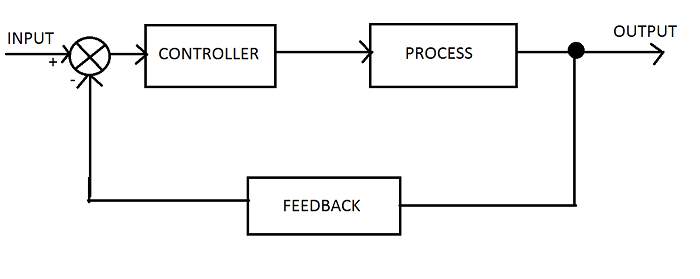
Fig. 3.2: Block diagram of close loop system
Elements of CNC system
Already written your paper? Make it submission-ready.
Our professional editors fix grammar, clarity, structure, and referencing mistakes that spell-checkers miss. Choose light proofreading or full structural editing — your polished, properly cited draft is typically returned within 12 to 24 hours.
✓ Plagiarism-free · ✓ 100% human · ✓ Free revisions · ✓ Confidential
🔒 No payment to start · From 3 hrs
CNC system consists mainly of 6 major elements:
- Input device
- Machine control unit
- Machine tool
- Driving system
- Feedback devices
- Display system
- Introduction to the biomedical material
Biomedical material are those material that can be used in conjugation with the human body. An ideal biomaterial is expected to exhibit the properties like high biocompatibility and there should be no adverse tissue response. Also its density must be low as that of the bones, high mechanical strength and fatigue resistance, good wear resistance and low elastic modulus. It is very difficult to combine all the desired property of the element into one material. Selected materials are used as biomedical material due to their high excellent mechanical properties and high biocompatibility. Metallic bonds in this material are non-directional, position of metal ions can be altered without destroying crystal structure results in plastically deformable solids. The principal disadvantage of using metal as biomaterials is its corrosion in vivo environment. Some metals can be tolerated by the body in small amount as metallic ions. The consequences of corrosion weakens the implants and leads to its disintegration and have harmful effect on the surrounding tissues and organs. Some metals are used as substitute for the replacement of knee and hip joints in the body and also to integrate the fractured bones ih the body. For fractured bone plate and screws are used and also dental implants can be used in the teeth. Some metallic alloys are even used for more active roles like actuator for vascular stent and orthodontic arch wires. Metallic biomaterial can be grouped into following categories:
- Stainless steel
- Titanium base alloys
- Cobalt base alloys
- Speciality metallic alloys
Vanadium steel was the first metal alloy that was developed for human use but no longer in use in implants because corrosion resistance of this material is not adequate in vivo environment. Later in 1950s 18-8s with low carbon content stainless steel was introduced and it was widely used for the purpose of implant fabrications. These alloy have good resistance to the chloride solutions. Castable CoCrMo alloys used for decades recently in making joints and in dentistry purpose. Currently CoNiCrMo are used for the purpose of making heavily loaded joints such as knee and hip joints. Above both the alloys have excellent properties of corrosion resistance.
Attempts to use the titanium alloys as biomaterial was made in the year 1930s. Titanium light weight and good mechanical chemical properties made it suitable for implants applications. Titanium tolerance is similar to that of stainless steel and cobalt alloys. Titanium have bioactive behaviour due to which there is slow growth of hydrated titanium oxide on titanium implant surface that incorporate calcium and phosphorous. Titanium is the only material that have the property to osseo integrat. So the light weight, high mechanical strength, fatigue strength and excellent corrosion resistance property made it the best biomedical material among all the material used now a days. Titanium cannot react with the body fluids even in the very long terms of its service.
- Titanium alloys
Ti-6Al-4V is alpha beta alloy of titanium contains about 6% aluminum and 4% vanadium and rest titanium. The vanadium acts as the beta stabilizer and provide greater amount of ductile in the beta phases during its hot working. The aluminum mainly stabilize and strengthen the alpha phase by raising the beta-transus temperature as well as by reduction in the density of the alloys. These titanium alloys have excellent tensile property even at the room temperature, annealed materials have a typical tensile strength of 1000-1100 MPa (145-160 ksi) and is found useful creep resistances up to 300°C of about 570 MPa (83 ksi) for about 0-1% total plastic strains in 100 hour. Heat treatment gives guaranteed minimum tensile strength of 1100 MPa (160 ksi) for application such as springs, bolts or other fasteners.
Like as the most grade among the titanium alloy Ti-6%Al-4%V has an excellent resistance to corrosion in natural and industrial environment. Its density is 4.0-4.2 g/cm3 even lower than pure form of titanium. Resistance to fatigue and crack propagation is being excellent. It can be formed and forged readily and also use in many welding operations are possible.
Table 3.1 Chemical composition of Ti-6Al-4V:
| Element | Al | V | Fe | H2 | Ti |
| Wt % | 5.5-6.75 | 3.5-4.5 | 0.30 max | 0.0125 max | Remainder |
Titanium alloy is available as the annealed plate, hot worked rod, sheet, bar and billet for future working and also as an annealed rod and bar for machining purposes. Pipes can also be supplied as extrusion or formed and welded from the plate. Heat-treatable rod is used for the purpose of fasteners manufacturing and also bar-drawn wire can be made for spring application.
General Characteristic:
The outstanding corrosion resistance and high strength or low weight ratio inherent in titanium and its alloys has led to the wide range of successful application which demand in high level of reliable performance in aerospace, auto-motive, chemical plant, power generation, oil and gas extraction, sport, surgery and medicine as well and in other major industries. In majority of this and other engineering application titanium has replaced other material heavier, less serviceable or less cost effective materials. Designing anything with titanium taking all factors into account has resulted in reliable, economic and durable systems and component, which in many situation has substantially exceeded the performance and service life expectation. Titanium is also available in several different grades. Pure titanium is not much strong as the different titanium alloys are.
Table 3.2 Mechanical properties:
| Properties | Metric |
| Tensile strength | 220 MPa |
| Modulus of elasticity | 116 GPa |
| Shear modulus | 43 GPa |
| Hardness, Brinell | 70 |
| Elongation at break | 54 % |
| Poisson ratio | 0.34 |
Table 3.3 Physical properties:
| Properties | Metric |
| Density | 4.50 g/cm3 |
| Melting point | 1650-1670 C |
| Boiling point | 3287 C |
3.3.1 Why titanium alloy:
Titanium alloy is incredibly used for the number of different industries like including the automotive, aerospace and architectural world. As titanium can resist corrosion it is biocompatible and also has an innate ability to join with the human bones and now it acts as the staple in field of medical. Now from starting from surgical titanium instruments to the orthopedic titanium rod plate and pin all medical and dental titanium truly become the fundamental material used in field of medicine.
Because of the high specific strength and excellent corrosion resistance, titanium alloys are used in the engineering field, namely in the aerospace, automotive and biomedical parts widely. In many application these material replaced the steels and aluminum alloys which usually results in the weight or space saving increase of system efficiency by rising service temperature and removal of the need of protective coatings that should be use in steels.
3.4 Medical Grade titanium
Titanium 6AL4V alloy made of 6% Aluminum and 4% Vanadium is the most commonly type of titanium used in the field of medicine. Because of its combining factor with human body titanium alloy are widely used in almost all the medical procedures and also in body Piercings.
Ti-6Al-4V offers us the greater fracture resistance when it used in dental implant. The implant steps begin with insertion of titanium screw in the jaw. The screw behaves like the root of the tooth. After a certain period of time passed for the bone grow into medical grade titanium screw the fake tooth is connected to the implant.
Advantages of Medical titanium:
- Stronger
- Light in weight
- Corrosion resistant
- Cost efficient
- Non toxic in nature
- Bio compatible
- Long-lasting
- Non- ferromagnetic
- Osseo integrated ( the joining of bone with artificial implants)
- Long range availability
- Flexibility and elasticity rivals that of human bone
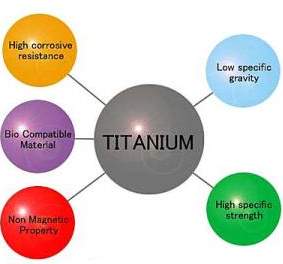
Fig.3.3: Properties of titanium alloy
One of the greatest benefit to use titanium is its higher strength-to-weight ratio and corrosion resistance property. Coupling it with non-toxic state and ability to fight from body fluid and its no wonder that titanium has became the metal of choice in field of medicine.
Already written your paper? Make it submission-ready.
Our professional editors fix grammar, clarity, structure, and referencing mistakes that spell-checkers miss. Choose light proofreading or full structural editing — your polished, properly cited draft is typically returned within 12 to 24 hours.
✓ Plagiarism-free · ✓ 100% human · ✓ Free revisions · ✓ Confidential
🔒 No payment to start · From 3 hrs
| Titanium is incredibly durable and used long-lasting. When the rod, cages, plates and pins made up of titanium is inserted in the body it lasts for over 20 years. And the dental titanium like that of titanium posts and implants can last even longer than that. |
